

 Urgent? WhatsApp a buyer
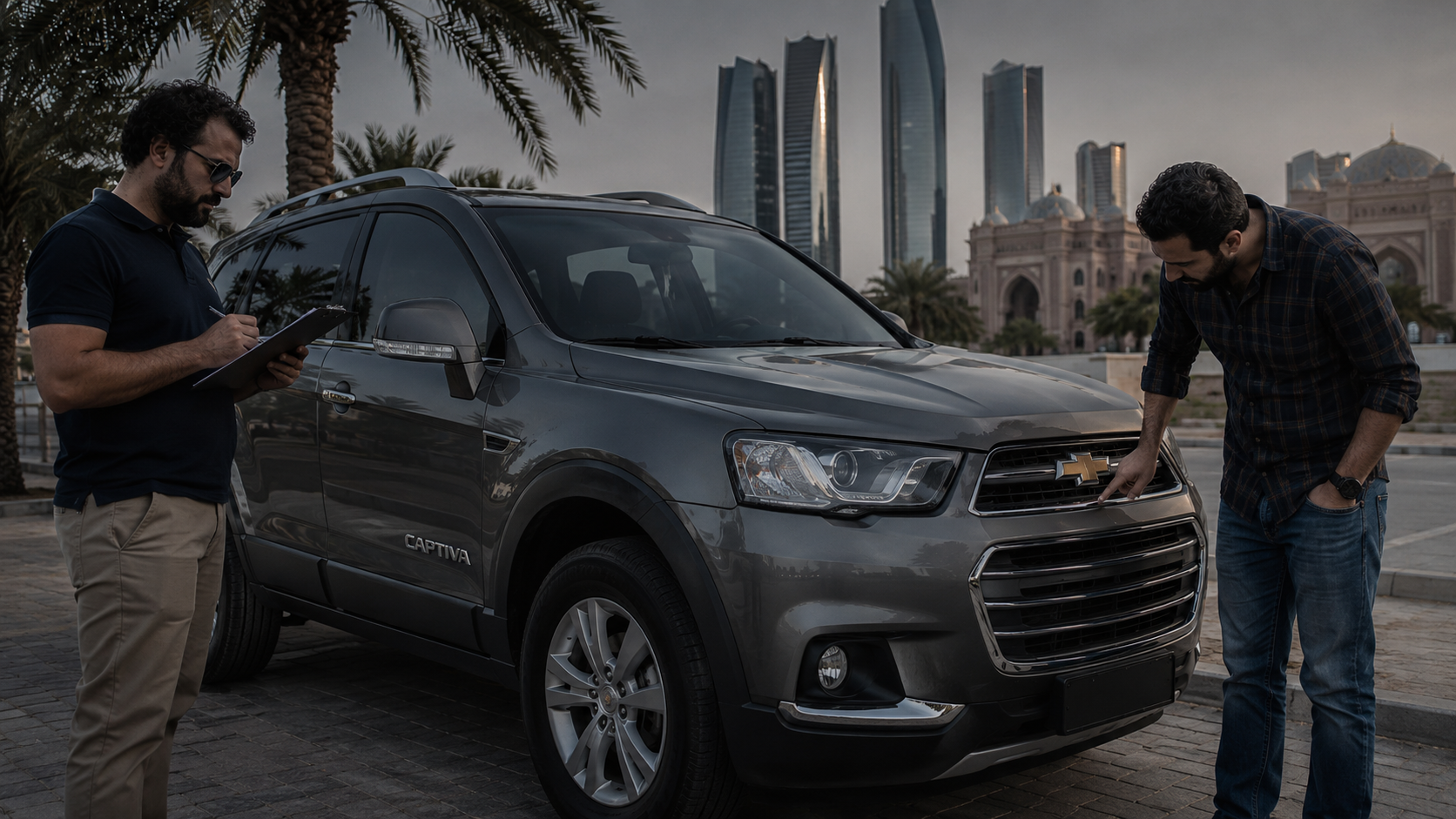
Selling a Chevrolet Captiva: Confirm the Badge Generation and Avoid Mixing Different Specifications
Selling a Chevrolet Captiva: Confirm the Badge Generation and Avoid Mixing Different Specifications
Selling a Chevrolet Captiva in Abu Dhabi requires more than checking its model year and mileage. You must identify the correct Captiva generation, confirm the engine, and verify the original vehicle specifications. Chevrolet has used the Captiva name on different SUV designs over the years. Therefore, two vehicles with the same badge may have different engines, transmissions, equipment, and market values. If you want to sell Chevrolet Captiva Abu Dhabi, accurate vehicle details can help you attract serious buyers, support a fair valuation, and avoid confusion during an inspection.
Many car owners focus on the Chevrolet badge when preparing their vehicles for sale. However, the Captiva name alone does not identify every technical detail.
For example, an older Captiva may have a different engine and drivetrain from a newer model. Likewise, the same model year may include several equipment levels.
Therefore, sellers should confirm their vehicle’s exact identity before advertising it.
At iCarsU.com, car owners in Abu Dhabi can request a vehicle valuation and discuss selling their used cars. Clear specifications help buyers assess each vehicle according to its actual condition and features.
This guide explains how to identify your Chevrolet Captiva generation, check its specifications, and prepare accurate details for a sale.
Why Chevrolet Captiva Generation Identification Matters
Chevrolet Captiva generation identification plays an important role in the used car market.
Chevrolet introduced the Captiva name on an SUV during the 2000s. Later, the company introduced a substantially different vehicle under the same name in several markets.
As a result, the Captiva badge does not always describe the same vehicle design.
Older Captiva models commonly feature different engine choices, body designs, and mechanical systems. Meanwhile, newer versions use a different platform and more modern equipment.
Therefore, sellers should avoid combining specifications from separate generations.
For example, an advertisement may describe an older Captiva using the engine specifications of a newer model. Such an error can confuse buyers and create unrealistic expectations.
Additionally, inaccurate information can affect price comparisons.
A buyer may compare two Captiva advertisements and assume both vehicles share identical mechanical features. However, the vehicles may belong to different generations.
Consequently, the buyer may question the seller’s asking price.
Correct generation identification helps sellers:
-
Describe their vehicles accurately.
-
Compare similar Chevrolet Captiva models.
-
Confirm the correct engine and transmission.
-
Explain available safety and comfort features.
-
Avoid incorrect spare parts information.
-
Support a realistic selling price.
-
Reduce disagreements during inspections.
Furthermore, accurate details help buyers understand the vehicle before arranging an appointment.
Understand the Main Chevrolet Captiva Generations
Before you sell Chevrolet Captiva Abu Dhabi, identify the vehicle’s basic generation.
The Captiva name has appeared on different SUV designs across international markets. Therefore, UAE sellers should focus on the vehicle’s actual specifications.
Older Chevrolet Captiva Models
The original Chevrolet Captiva entered international markets in 2006.
This generation featured a traditional SUV design with several petrol engine options across different markets and production years.
For example, some versions offered four-cylinder engines. Other versions featured V6 engines.
Additionally, equipment and drivetrain configurations varied.
Some older vehicles offered front-wheel drive, while others featured all-wheel drive.
However, sellers must confirm the actual drivetrain instead of relying on the Captiva badge.
Older Captiva vehicles also received design and mechanical updates during their production life.
These changes affected their appearance, engines, transmissions, and interior equipment.
Therefore, a 2008 Captiva may differ significantly from a 2015 Captiva.
Even when both vehicles share the same general generation, they may require different parts.
Consequently, owners should avoid copying specifications from another production year.
Newer Chevrolet Captiva Models
Chevrolet later introduced a different Captiva design in the Middle East.
The newer vehicle arrived in the UAE around 2020 and shares its origins with the Baojun 530 platform.
Unlike the older Captiva, this version uses a different vehicle architecture.
For example, UAE versions commonly feature a 1.5-litre turbocharged petrol engine.
Additionally, many newer models use a continuously variable transmission, or CVT.
The newer Captiva also focuses on family transportation and practical cabin space.
Depending on the model year and version, it may offer three rows of seating.
However, sellers should confirm their actual seating arrangement.
Furthermore, technology and safety equipment can vary between trims.
Therefore, a newer Captiva should not automatically inherit the specifications of an older model.
Updated Captiva Models and Equipment Changes
Chevrolet has also updated the newer Captiva’s appearance and equipment.
For example, some later models feature revised exterior styling and larger infotainment displays.
Meanwhile, safety equipment and interior materials can differ between versions.
These changes do not necessarily create an entirely new mechanical generation.
Therefore, sellers should separate a major generation change from a normal model update.
A new bumper, grille, or dashboard design does not always indicate a new vehicle platform.
Similarly, a vehicle may retain its mechanical design while gaining additional equipment.
Accurate identification requires several checks rather than appearance alone.
Check the Vehicle Identification Number Before Advertising
The Vehicle Identification Number, commonly called the VIN, provides a useful starting point.
Every Chevrolet Captiva has a unique vehicle identification number.
Manufacturers use this number to identify individual vehicles and their production information.
Therefore, the VIN helps owners verify their Captiva’s original details.
You can usually find the VIN in several locations.
For example, check the vehicle registration documents.
Additionally, inspect the identification plate or label on the vehicle.
Some vehicles display the VIN near the dashboard or driver’s door area.
However, the exact location can vary.
After finding the number, compare it with the vehicle records.
Both numbers should match.
If they do not match, resolve the difference before advertising the vehicle.
Use Official Vehicle Data
A VIN can help a Chevrolet dealer or an appropriate vehicle information service locate relevant production records.
However, not every public VIN decoder provides complete specifications.
Some online tools identify only the manufacturer, model family, or general production information.
Therefore, avoid treating every online decoder as a complete factory record.
Instead, request original vehicle information when necessary.
This information may help confirm:
-
Model and production details.
-
Original engine configuration.
-
Transmission type.
-
Factory drivetrain.
-
Vehicle specification.
-
Original equipment.
-
Market configuration.
Additionally, keep any supporting documents available for inspection.
Accurate records can make a Chevrolet Captiva sale more straightforward.
Confirm the Model Year and First Registration Date
Many sellers confuse the vehicle’s model year with its first registration date.
However, these details do not always match.
For example, a dealership may sell a vehicle during the year after its production.
Likewise, an imported Captiva may enter the UAE several years after its original manufacture.
Therefore, the first UAE registration date may not identify the vehicle’s model year.
This difference matters when comparing prices.
A buyer searching for a particular Captiva model year may expect certain features.
However, an incorrectly advertised vehicle may offer different equipment.
Consequently, buyers may lose confidence in the advertisement.
Before listing your Captiva, check its registration records and original vehicle documents.
Additionally, compare those records with verified manufacturer information.
If you find a difference, explain it clearly.
For example, distinguish the model year from the first registration year.
This simple step can prevent confusion during negotiations.
Verify the Chevrolet Captiva Engine Specifications
Engine identification is another important step when selling a Chevrolet Captiva.
Different Captiva generations have used different engine configurations.
Therefore, owners should never assume that all Captiva SUVs share the same engine.
Engine Options in Older Captiva Models
Older Captiva vehicles appeared with several engine options across international markets.
These included different four-cylinder and V6 petrol engines.
However, availability varied by country and model year.
Therefore, a specification from another market may not match your UAE vehicle.
Some online advertisements also contain incorrect engine descriptions.
For example, an owner may copy a listing from a vehicle with a different engine capacity.
Consequently, the advertisement may give buyers inaccurate information about performance and maintenance.
Instead, use your vehicle’s original documents and verified technical records.
Engine Details in Newer Captiva Models
Newer UAE-market Captiva models commonly use a 1.5-litre turbocharged petrol engine.
For example, Chevrolet’s recent UAE Captiva information identifies a 1.5-litre turbo engine.
However, owners should still verify their individual vehicle’s specifications.
Market differences and model updates can affect published technical figures.
Additionally, owners should distinguish engine capacity from engine power.
A 1.5-litre engine description does not automatically confirm its horsepower or torque.
Therefore, avoid publishing performance figures without reliable supporting information.
Engine Replacement Records
Some used Captiva vehicles may have undergone an engine replacement.
If your vehicle has a replacement engine, disclose the change accurately.
Additionally, collect the relevant workshop invoices and replacement records.
Confirm that the vehicle’s registration information meets applicable requirements.
A replacement engine may affect buyer expectations and valuation.
However, clear documents can help buyers understand the work.
Identify the Correct Captiva Transmission
Transmission information can significantly influence a used car buyer’s decision.
Therefore, every Captiva model specification seller should verify the gearbox before advertising.
Older Captiva models offered different automatic transmission configurations depending on the engine and production year.
Meanwhile, newer UAE-market models commonly use a CVT.
A CVT operates differently from a conventional automatic gearbox.
However, both systems allow automatic driving without manual gear selection.
Therefore, an advertisement that simply says “automatic” may not provide enough technical detail.
When possible, identify the actual transmission type.
Check Transmission Maintenance Records
Transmission maintenance records can also support a sale.
For example, previous service invoices may show transmission fluid replacement.
Additionally, a workshop may record inspections, repairs, or diagnostic findings.
However, a basic service invoice does not prove that a workshop completed every recommended transmission procedure.
Read each invoice carefully.
If it records only an inspection, describe it as an inspection.
Likewise, do not claim a full gearbox service when the invoice covers only a minor repair.
Accurate maintenance information helps buyers assess the vehicle more confidently.
Confirm Front-Wheel Drive or All-Wheel Drive
Drivetrain identification matters because different systems have different maintenance requirements.
Some older Chevrolet Captiva models offered all-wheel-drive configurations.
However, not every older Captiva has all-wheel drive.
Similarly, newer UAE-market Captiva models commonly use front-wheel drive.
Therefore, sellers should never assume that every Captiva SUV has four-wheel drive.
A high driving position does not confirm the drivetrain.
Likewise, an SUV body does not automatically indicate off-road capability.
Before advertising your vehicle, confirm its original drivetrain.
You can use factory vehicle data, original documents, or a qualified inspection.
Additionally, explain any drivetrain repairs when relevant.
For example, older all-wheel-drive vehicles may have maintenance records for additional drivetrain components.
These records can help buyers evaluate their condition.
Correct drivetrain information also supports better vehicle comparisons.
Check the Chevrolet Captiva Trim Level
Trim identification is another important part of accurate vehicle advertising.
Chevrolet has offered different Captiva trim names over the years.
For example, newer UAE-market models include LS, LT, and Premier versions.
However, the equipment attached to each trim can change by model year.
Older Captiva models may use other trim names, including LTZ.
Therefore, sellers should not compare trim names without checking the generation.
LS Equipment
LS generally represents an entry-level version in newer UAE Captiva lineups.
However, entry-level equipment can still include useful technology.
For example, recent UAE specifications list infotainment features and parking assistance for LS models.
Nevertheless, equipment can vary by production year.
Therefore, confirm the features in your actual vehicle.
LT Equipment
LT versions may offer additional comfort, convenience, or safety equipment.
For example, some recent Captiva LT specifications list extra airbags and different interior materials.
However, equipment lists can change.
Therefore, avoid assuming every LT vehicle has identical features.
Premier Equipment
Premier generally represents a higher equipment level in recent Captiva lineups.
Depending on the year, features may include a panoramic sunroof or advanced parking cameras.
However, do not claim these features without checking your vehicle.
A missing or replaced component may also affect the actual equipment.
Consequently, the original trim name and present condition both matter.
Avoid Mixing Chevrolet Captiva Specifications From Different Markets
A Captiva model specification seller should always consider regional differences.
Manufacturers sometimes offer different versions of the same vehicle in different countries.
These differences can involve engines, safety equipment, infotainment systems, and interior configurations.
Therefore, specifications from an overseas website may not describe a UAE-market Captiva.
For example, an international advertisement may list an engine that Chevrolet never offered on the relevant UAE version.
Likewise, safety features may differ across markets.
Consequently, copying a complete specification sheet from another country can create errors.
Verify GCC Specifications
Many buyers in Abu Dhabi prefer to understand whether a vehicle has GCC specifications.
GCC commonly refers to Gulf Cooperation Council markets.
However, a GCC specification claim should rely on vehicle evidence.
Check original dealer records, manufacturing information, and relevant vehicle documents.
Additionally, verify the vehicle’s original sales market when possible.
Do not assume that UAE registration automatically proves original GCC specifications.
An imported vehicle may hold valid UAE registration while retaining another market’s original configuration.
Therefore, describe the original specification separately from its current registration status.
Imported Chevrolet Captiva Vehicles
Some Captiva vehicles reach Abu Dhabi through import channels.
These vehicles may have different original equipment.
For example, an imported version may use a different infotainment configuration.
Additionally, its safety equipment or engine details may differ.
Therefore, disclose the vehicle’s original market when you have reliable evidence.
Avoid advertising an imported Captiva as GCC specifications without confirmation.
Clear information can help buyers compare vehicles fairly.
Confirm the Actual Seating Capacity
Seating capacity is an important selling feature for many Captiva buyers.
Families often search for vehicles with enough space for children and passengers.
However, not every Captiva across every market and generation has the same seating configuration.
Some versions offer five seats.
Meanwhile, other models feature seven-seat layouts.
Therefore, sellers should verify the actual seating capacity.
Count the installed seats and confirm the original configuration through vehicle records.
Additionally, check the seatbelts and seat mechanisms.
A seven-seat advertisement should describe a vehicle with a genuine, usable seven-seat configuration.
Do not assume that the vehicle has seven seats simply because another Captiva model offers them.
Inspect the Third Row
If your Captiva has a third row, inspect it before the sale.
First, check the seat folding mechanism.
Next, inspect the seatbelts.
Then, examine the upholstery and nearby interior panels.
Additionally, test access to the rear seats.
If a mechanism does not operate correctly, disclose the issue.
A buyer may value the third row for family use.
Therefore, accurate seating information can improve the quality of buyer enquiries.
Check Safety Features Before Listing Your Captiva
Safety equipment can differ between Captiva generations and trims.
Therefore, avoid making broad claims about every Chevrolet Captiva model.
For example, some versions offer more airbags than others.
Similarly, certain vehicles include electronic stability control or additional driver assistance.
However, the exact equipment depends on the vehicle.
Verify Airbag Information
Check the original specification records for the airbag configuration.
Additionally, inspect the vehicle for warning lights.
Do not assume the number of airbags from a trim name alone.
If the vehicle displays an airbag warning, arrange a proper diagnosis.
Furthermore, disclose any known safety system faults.
Parking Cameras and Sensors
Parking equipment can also differ.
Some Captiva versions have rear parking sensors.
Others include a reversing camera or more advanced camera systems.
However, factory equipment and aftermarket equipment are not the same.
If a previous owner installed a camera, describe it accurately.
For example, identify the camera as an aftermarket accessory when you know its origin.
This distinction helps buyers understand the actual vehicle specification.
Inspect the Infotainment and Interior Equipment
Modern Captiva buyers often compare interior technology.
Therefore, accurate equipment descriptions can make your advertisement more useful.
Check the infotainment screen, audio system, climate controls, and charging ports.
Additionally, test the steering-wheel controls and other electronic features.
Some recent Captiva models offer a 10.4-inch infotainment display.
However, screen sizes and functions vary across years and markets.
Therefore, do not copy a newer model’s equipment list into an older Captiva advertisement.
Confirm Smartphone Connectivity
Some Captiva versions support smartphone connectivity features.
However, compatibility may depend on the infotainment system and model year.
Therefore, test the functions before listing them.
If you cannot confirm a feature, avoid promising it.
Likewise, check whether previous owners installed replacement equipment.
An aftermarket display may look similar to a factory screen.
However, it may have different functions and reliability.
Describe these changes clearly.
Compare Chevrolet Captiva Prices Using the Correct Generation
When you sell Chevrolet Captiva Abu Dhabi, correct price comparisons matter.
Many sellers search online advertisements to estimate their car’s value.
However, the advertised prices may represent several different generations.
For example, an older V6 Captiva and a newer 1.5-litre turbo Captiva are not directly comparable.
Their engines, platforms, features, and maintenance requirements differ.
Therefore, comparing them only by badge can produce an unrealistic valuation.
Start With Matching Vehicles
Look for vehicles with the same generation.
Next, compare similar model years.
Then, check engine and transmission details.
Additionally, consider trim level and original market specification.
Finally, compare mileage and condition.
These steps create a more relevant starting point.
Consider Vehicle Condition
Two Captiva vehicles with identical specifications can have different values.
For example, one vehicle may have complete service records.
Meanwhile, another may need suspension or cooling-system repairs.
Therefore, their asking prices should not automatically match.
A buyer may also consider accident history, tyre condition, and interior wear.
Consequently, accurate condition information supports a more realistic price.
Separate Asking Prices From Completed Sales
Online advertisements usually display seller expectations.
However, an asking price does not prove that a buyer completed a transaction at that amount.
Some sellers may also advertise above their intended selling price.
Therefore, use advertised prices as reference points rather than confirmed market values.
A professional vehicle assessment can provide additional information about your Captiva’s condition.
Prepare Your Chevrolet Captiva for Inspection in Abu Dhabi
Before arranging a buyer inspection, prepare your vehicle properly.
A clean and organised vehicle helps the buyer examine its condition.
However, cleaning cannot replace accurate mechanical information.
Therefore, focus on presentation and reliable records.
Examine the Exterior
Start with the body panels.
Look for scratches, dents, paint differences, and damaged trim.
Additionally, inspect the headlights and rear lights.
Check the wheels and tyres.
If you know about previous body repairs, disclose them.
Avoid claiming original paint without supporting evidence.
Examine the Interior
Next, clean the seats, dashboard, and storage compartments.
Check the air conditioning.
Abu Dhabi drivers often rely heavily on air conditioning during hot weather.
Therefore, buyers may pay close attention to cooling performance.
Additionally, test the windows, locks, and electronic controls.
Record any known faults before the inspection.
Check Mechanical Condition
Inspect fluid levels according to the vehicle manufacturer’s instructions.
Additionally, watch for warning lights.
If the vehicle has an unusual noise or vibration, arrange a qualified diagnosis.
Do not hide mechanical problems.
Instead, explain known issues and provide any relevant workshop findings.
Transparent information can reduce disagreements during a sale.
Collect Chevrolet Captiva Service Records
Maintenance history can help buyers understand how an owner cared for a vehicle.
Therefore, collect available service invoices before advertising your Captiva.
Useful records may include oil changes, brake work, cooling-system repairs, and transmission maintenance.
Additionally, include records for important replacement parts.
However, avoid overstating the maintenance history.
For example, a recent oil change does not prove that the vehicle received every recommended service.
Likewise, a workshop inspection does not automatically confirm perfect mechanical condition.
Read the invoices carefully.
Check the dates and recorded mileage.
Furthermore, compare the service records with the current odometer reading.
If documents contain gaps, explain what information you have.
Clear records can help a buyer assess the vehicle without relying entirely on verbal claims.
Explain Accident and Repair History Clearly
Accident history can influence the value of a used Chevrolet Captiva.
Therefore, sellers should disclose known accidents and significant repairs.
However, different repairs have different meanings.
For example, a minor bumper repair differs from structural damage.
Similarly, replacing a damaged exterior panel does not automatically indicate major chassis damage.
Therefore, describe the actual work rather than making broad statements.
Collect Available Repair Evidence
If your Captiva underwent body repairs, collect relevant invoices.
Additionally, retain inspection reports when available.
These documents may help explain which components a workshop repaired or replaced.
However, an invoice only supports the work that it records.
Do not claim that a vehicle has no accident history solely because you lack repair invoices.
Instead, explain what you know.
Check Available Vehicle History
Owners in Abu Dhabi can review relevant official vehicle and accident records through applicable services.
However, the coverage and details can vary.
Therefore, do not treat a single report as a complete record of every possible incident.
A physical inspection may reveal additional information.
Consequently, combine available records with an honest description of the vehicle.
Create an Accurate Chevrolet Captiva Advertisement
A clear advertisement helps serious buyers understand your vehicle.
Therefore, use verified information rather than general descriptions.
Start with the correct model year.
Next, identify the Captiva generation and trim.
Then, include the engine, transmission, and mileage.
Additionally, state the vehicle’s original regional specification when you can verify it.
Describe the Vehicle Accurately
A useful description includes:
-
Chevrolet Captiva model year.
-
Correct generation or body version.
-
Verified trim level.
-
Engine capacity and type.
-
Transmission configuration.
-
Front-wheel drive or all-wheel drive.
-
Actual seating capacity.
-
Current mileage.
-
Original market specification.
-
Known accident and repair history.
-
Available service records.
-
Important features and known faults.
Furthermore, explain any modifications.
For example, a replacement infotainment system may differ from the factory equipment.
Likewise, aftermarket wheels should not automatically support a higher factory trim claim.
Use Clear Vehicle Photographs
Take photographs in good lighting.
Include the front, rear, sides, and interior.
Additionally, photograph the dashboard and seats.
If the Captiva has seven seats, show the third row.
However, hide private information before sharing documents or registration details online.
Clear photographs can reduce unnecessary questions from buyers.
Avoid Common Chevrolet Captiva Selling Mistakes
Several common mistakes can delay a Captiva sale.
Fortunately, sellers can avoid many of them through simple checks.
Mistake 1: Identifying the Generation From the Badge Alone
The Captiva badge appears on different vehicle designs.
Therefore, use the VIN and original records to confirm the correct generation.
Mistake 2: Copying Another Advertisement
Another seller may advertise a different engine or trim.
Consequently, copying that description can introduce false information.
Use your own vehicle’s verified details instead.
Mistake 3: Confusing Model Year and Registration Year
These dates may differ.
Therefore, distinguish them clearly.
Mistake 4: Assuming Every Captiva Has Seven Seats
Seating configurations vary.
Therefore, confirm the actual arrangement.
Mistake 5: Advertising Unverified GCC Specifications
UAE registration does not automatically confirm original GCC specifications.
Instead, check the available vehicle evidence.
Mistake 6: Mixing Engine and Transmission Details
Older and newer Captiva vehicles use different mechanical systems.
Therefore, avoid applying newer specifications to older models.
Mistake 7: Overstating Maintenance History
A repair invoice proves only the work it records.
Consequently, describe maintenance accurately.
Mistake 8: Comparing Different Generations by Price
Two Captiva vehicles may have completely different mechanical designs.
Therefore, compare similar vehicles before choosing an asking price.
Sell Chevrolet Captiva Abu Dhabi With iCarsU.com
If you want to sell Chevrolet Captiva Abu Dhabi, iCarsU.com provides a way to discuss your vehicle with a used car buyer.
Whether you own an older Captiva or a newer family SUV, accurate information helps start the process.
First, prepare the basic vehicle details.
Include the model year, mileage, and trim level.
Next, confirm the engine and transmission.
Additionally, explain the vehicle’s general condition.
Then, share relevant maintenance information and photographs.
These details help the buyer understand the vehicle before arranging an assessment.
Start With Accurate Vehicle Information
At iCarsU.com, sellers can request a car valuation.
However, the information you provide should describe your actual Captiva.
For example, specify whether you own an older generation or a newer turbocharged model.
Additionally, mention known repairs and important equipment.
This information can help support a more relevant assessment.
Arrange a Vehicle Inspection
A physical inspection helps assess the Captiva’s actual condition.
For example, an inspection may consider body condition, interior wear, and mechanical performance.
Additionally, the buyer may check whether the advertised specifications match the vehicle.
Therefore, keep relevant documents available.
If an issue appears during the inspection, discuss it clearly.
The vehicle’s actual condition can affect the final offer.
Review the Offer Before Agreeing
After the assessment, review the proposed amount and conditions.
Make sure you understand the payment process.
Additionally, confirm any arrangements for collection and ownership transfer.
Do not hand over the vehicle based only on an unverified payment screenshot.
Instead, confirm the funds through your own banking channel.
Finally, complete the required transfer procedure through the appropriate official service.
Selling a Chevrolet Captiva Across Abu Dhabi
Chevrolet Captiva owners live throughout Abu Dhabi.
Therefore, sellers may start their search from different residential and commercial areas.
For example, owners in Khalifa City may want to sell a family Captiva after changing vehicles.
Meanwhile, drivers in Mohammed Bin Zayed City may want to sell an older Captiva with higher mileage.
Similarly, residents of Al Reem Island may own newer Captiva models with different equipment.
The same careful identification process applies across these locations.
Chevrolet Captiva Sellers in Mussafah
Mussafah has many automotive service businesses and vehicle-related facilities.
Therefore, some Captiva owners may already have workshop records from this area.
Collect the relevant invoices before requesting a valuation.
Additionally, confirm the vehicle’s specifications independently from any previous advertisement.
Chevrolet Captiva Sellers in Khalifa City
Khalifa City residents may use their Captiva for family transportation and daily journeys.
Therefore, seating capacity, air conditioning, and service history may matter to prospective buyers.
However, generation identification remains equally important.
Confirm the exact model before comparing offers.
Chevrolet Captiva Sellers on Al Reem Island
Drivers on Al Reem Island may own Captiva vehicles from different production years.
Therefore, avoid comparing an older Captiva with a newer version using only mileage.
Instead, confirm the engine, transmission, and trim.
Accurate details support a more relevant valuation.
Chevrolet Captiva Sellers in Al Raha and Yas Island
Owners around Al Raha Beach and Yas Island can also prepare their Captiva for sale using verified records.
First, check the registration details.
Next, collect service documents.
Then, describe the vehicle’s condition.
Additionally, explain its original specification and equipment.
These steps can help create a clearer selling process regardless of location.
Use Original Vehicle Data to Support Your Captiva Valuation
Original vehicle information can help establish a more accurate description.
However, it does not determine the vehicle’s value by itself.
A buyer must also consider condition, mileage, maintenance, and market demand.
Therefore, use factory data alongside current vehicle evidence.
For example, factory records may identify the original trim.
However, an earlier owner may have replaced some equipment.
Similarly, original engine information may differ from the current configuration after a documented replacement.
Therefore, check both the factory specification and the vehicle’s present condition.
This approach helps prevent incorrect assumptions.
It also gives buyers a clearer picture of the Captiva they intend to purchase.
Build Buyer Confidence Through Clear Specifications
Trust matters during a used vehicle transaction.
However, sellers do not need complicated technical explanations to establish confidence.
Simple, accurate information often works better.
For example, identify the correct model year.
Next, confirm the Captiva generation.
Then, describe the engine and transmission.
Additionally, disclose known faults.
If you have service records, share the relevant information.
If you cannot confirm a feature, avoid making an unsupported claim.
This approach can reduce unnecessary negotiations over incorrect details.
Furthermore, it helps buyers focus on the actual vehicle.
A clear advertisement also reduces the risk of disappointment during an inspection.
Therefore, accurate Captiva information benefits both the seller and the buyer.
Complete the Chevrolet Captiva Sale Safely
Before completing the transaction, check the remaining ownership requirements.
For example, confirm whether the vehicle has an outstanding finance balance.
Additionally, review any traffic fines or transfer restrictions.
If the vehicle has finance, coordinate with the lender to resolve the outstanding obligations.
Next, confirm the agreed payment amount.
Use a payment method that you can verify independently.
Furthermore, avoid sharing banking passwords or one-time verification codes.
After confirming the payment arrangements, follow the applicable Abu Dhabi ownership transfer process.
The official process may require inspections, insurance arrangements, or other checks depending on the vehicle.
Therefore, confirm the current requirements through the relevant authority.
Finally, keep appropriate transaction and transfer records.
These records can help establish the details of the completed sale.
Sell Your Chevrolet Captiva With the Correct Details
Selling a Chevrolet Captiva in Abu Dhabi becomes more straightforward when you identify the vehicle accurately.
The Captiva name covers different SUV designs, engines, and equipment configurations. Therefore, sellers should never rely on the badge alone.
Start with Chevrolet Captiva generation identification. Then, check the VIN, original model information, engine, transmission, and trim level.
Additionally, confirm whether the vehicle has GCC specifications and verify its actual seating capacity.
Next, review the service records, accident history, and current mechanical condition.
These details help you compare similar vehicles and establish realistic price expectations.
If you want to sell Chevrolet Captiva Abu Dhabi, visit iCarsU.com to request a valuation and discuss your vehicle.
Share accurate specifications, describe its condition, and review the offer and transfer arrangements carefully.
Above all, identify the Captiva you actually own rather than copying details from another generation. This simple approach supports a clearer advertisement, a fairer assessment, and a more confident car sale in Abu Dhabi.
Can I sell my Chevrolet Captiva in Abu Dhabi if I cannot find the original specification documents?
Yes, you can sell your Chevrolet Captiva in Abu Dhabi without the original specification documents. However, you should confirm the vehicle’s details through its VIN, registration records, or an authorised Chevrolet service centre. Additionally, a professional inspection can help identify the engine, transmission, and drivetrain. Accurate information helps buyers assess your Captiva and reduces confusion during the sale.
Does Chevrolet Captiva generation identification affect spare parts availability in Abu Dhabi?
Yes, Chevrolet Captiva generation identification can affect spare parts availability and compatibility. Older and newer Captiva models use different engines, transmissions, and mechanical components. Therefore, buyers may consider maintenance costs when evaluating your vehicle. Before selling, confirm the generation and engine details to avoid incorrect assumptions about replacement parts.
Can I sell my Chevrolet Captiva in Abu Dhabi if its trim badges do not match the factory specifications?
Yes, you can sell your Chevrolet Captiva even when its exterior badges differ from the original factory trim. Previous owners sometimes replace badges or install accessories from higher trims. However, you should explain these changes honestly. Use the VIN and original vehicle records to confirm the actual trim level. Additionally, disclose aftermarket modifications so buyers can assess the vehicle accurately.
Will missing factory accessories reduce my Chevrolet Captiva resale value in Abu Dhabi?
Missing factory accessories may affect your Chevrolet Captiva resale value, depending on their importance and replacement cost. For example, missing headrests, original keys, or important interior components may concern buyers. However, minor cosmetic accessories may have less influence. Therefore, check your Captiva’s original equipment and explain any missing items before requesting a valuation from iCarsU.com.
Can I sell my Chevrolet Captiva in Abu Dhabi if the vehicle has a different specification from other Captiva models of the same year?
Yes, you can sell your Chevrolet Captiva in Abu Dhabi even when its specifications differ from similar models. Chevrolet offered different configurations across markets, production periods, and trim levels. Therefore, two Captiva vehicles from the same model year may have different features. Confirm your vehicle’s original specifications and describe them accurately. This helps buyers understand the differences and supports a more realistic selling price.
Add a comment Cancel reply
Categories
- Abu Dhabi (2)
- Accident History (2)
- Accidents (4)
- Car News (1)
- Car Registration (1)
- GCC Specs (4)
- Imported (4)
- Sell a car (1)
- Specs (2)
- Uncategorized (20,942)
- Used Car Buyer (105)
Recent Posts








Related posts

Traffic Fines Before a Car Sale in Abu Dhabi: Check Official Records and CLEAR Liabilities
iCarsU.com
November 12, 2026

Selling an Audi Q5 in Abu Dhabi: Identify the Engine and Drivetrain Using Original Vehicle Data
iCarsU.com
November 12, 2026
Car Payment Comes From Someone Other Than the Buyer: Resolve the Mismatch Before Handover
iCarsU.com
November 12, 2026
We work by appointments only. Please call or text to arrange an appointment first
Service Areas: Abu Dhabi (Head Office), Dubai, Sharjah, Ajman, Ras Al Khaimah, Fujairah, Umm Al Quwain.

 English
 Arabic