
 عاجل؟ واتساب مشترٍ عبر الواتساب



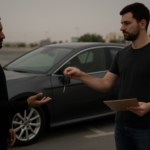






Electric-Car Sale in Abu Dhabi: Record Battery-Report Date, Method and Limitations
Electric-Car Sale in Abu Dhabi: Record Battery-Report Date, Method and Limitations
Selling an electric car in Abu Dhabi requires clear information about the vehicle’s battery condition. A battery report can help buyers understand the car’s health. However, sellers should record the report date, testing method, and limitations before sharing the results. These details help buyers understand what the report measures and what it cannot confirm. Therefore, anyone planning to sell electric car Abu Dhabi should prepare accurate battery records before arranging an assessment.
Electric vehicles have become a familiar sight across Abu Dhabi. Drivers use them for daily travel, family trips, and longer journeys. However, selling an electric vehicle requires slightly different preparation from selling a petrol car.
The battery plays an important role in the vehicle’s value. Therefore, potential buyers often request information about battery health, charging performance, and driving range.
A battery report can provide useful information. However, one percentage or dashboard reading cannot explain every part of the battery’s condition.
Sellers should understand the difference between a battery estimate and a detailed assessment. Moreover, they should explain the limits of any available report.
At iCarsU.com, sellers can start the car-selling process by sharing important vehicle details. Clear battery information can also support discussions about an electric vehicle’s condition.
Why Battery Records Matter When You Sell Electric Car Abu Dhabi
Electric cars use large battery packs to store energy. These batteries support the vehicle’s driving range and performance.
However, battery condition can change as the vehicle ages. Driving habits, charging patterns, temperature, and general use can influence battery performance.
Therefore, buyers often want information about the battery before making an offer.
A useful battery record helps sellers explain the vehicle’s current condition. Additionally, it reduces confusion during discussions with potential buyers.
For example, a seller may have a battery report showing a health estimate of 91%.
That figure may appear encouraging. However, the number alone does not explain how the testing service calculated it.
The report might use vehicle software. Alternatively, it might use a diagnostic tool that collects battery information.
Some tests estimate battery capacity. Meanwhile, others review fault codes or available battery-management data.
Consequently, two reports may provide different information about the same vehicle.
Sellers should record the testing method alongside the result. Furthermore, they should keep the original report rather than sharing only a screenshot.
Complete records allow buyers to review the information more carefully.
Understanding Electric Vehicle Battery Health
Battery health describes the condition of an electric vehicle’s battery compared with a defined reference.
Many reports use the term State of Health, or SOH.
Generally, this measurement helps describe how much battery capacity remains compared with a reference value.
For example, a report might estimate 90% battery health. However, sellers should understand what that percentage represents.
The figure might relate to usable energy capacity. Alternatively, a diagnostic system might calculate it through a manufacturer-specific method.
Therefore, sellers should avoid treating every battery-health percentage as an identical measurement.
Battery health also differs from the battery’s current charge level.
A battery with 80% charge does not necessarily have 80% health.
The charge level tells drivers how much energy the battery currently holds. Meanwhile, battery health describes a different aspect of its longer-term condition.
This difference matters during an electric car sale.
Moreover, dashboard range estimates cannot replace a battery-health assessment.
The dashboard may change its predicted driving range after different journeys. Driving speed, climate control, and other conditions can influence that prediction.
Consequently, sellers should not use the dashboard range alone to claim excellent battery health.
Record the Battery-Report Date Before Selling
The report date is one of the most important details in an electric car assessment.
A battery report describes information from a particular testing session. Therefore, sellers should record exactly when the service performed the assessment.
A report from last week may provide more recent information than one from the previous year.
However, a recent report does not automatically guarantee accuracy. The testing method and report limitations still matter.
When preparing electric car assessment records Abu Dhabi buyers may review, sellers should record the full testing date.
For example, a seller might write:
Battery assessment date: 12 October 2026
Vehicle mileage during assessment: 58,400 km
Testing provider: Name of the workshop or diagnostic service
Report reference: The identification number, if available
These details help connect the report with the vehicle’s condition at that time.
Additionally, sellers should keep the mileage from the date of testing.
Mileage matters because the vehicle may accumulate more kilometres after the assessment.
A buyer who receives an older report should know that driving continued after the test.
Therefore, sellers should not describe an older report as a current battery assessment.
Clear dates support better communication and reduce unnecessary disagreements.
Why the Testing Method Matters
An electric vehicle battery report can come from several testing methods.
However, different methods examine different information.
Some tools communicate with the vehicle’s battery-management system. Others analyse charging behaviour or estimate battery capacity.
A more detailed assessment may review additional information through specialist equipment.
Therefore, the testing method helps buyers understand the report’s meaning.
For example, a diagnostic scan might display a battery-health estimate from the vehicle’s software.
That information can help the seller. However, it may not represent a complete physical battery examination.
Similarly, a short test may collect useful information without measuring the battery’s full usable capacity.
Consequently, sellers should identify the method rather than simply stating that the battery passed an inspection.
When possible, record the equipment name, software version, and testing procedure.
Also, identify whether the service used manufacturer tools or independent diagnostic equipment.
These details help buyers interpret the result.
Moreover, they support comparisons when another assessment uses a similar method.
Common Methods Used in Electric Car Battery Assessments
Sellers may encounter several battery-testing approaches.
Each method provides different information. Therefore, understanding the differences helps prevent confusion.
Battery-Management System Readings
Electric vehicles use battery-management systems to monitor important battery information.
These systems may track charge levels, temperatures, voltages, and other operating data.
Some diagnostic tools can access selected information through the vehicle’s electronic systems.
However, manufacturers use different calculations and reporting methods.
Therefore, sellers should identify the source of any battery-health percentage.
A battery-management estimate can help explain the vehicle’s condition. Nevertheless, it does not always provide a complete picture.
Diagnostic Fault-Code Scanning
A diagnostic scan may identify recorded electrical or battery-related faults.
For example, the system might report an issue involving charging or battery temperature management.
However, the absence of fault codes does not prove that every battery component works perfectly.
Additionally, some diagnostic tools cannot access every manufacturer-specific system.
Therefore, sellers should record which systems the technician examined.
Battery Capacity Assessment
Some assessments attempt to estimate how much energy the battery can store or deliver.
These assessments may require particular charging or operating conditions.
However, test conditions can influence the result.
Therefore, sellers should keep information about the procedure.
A capacity estimate can provide useful evidence. Nevertheless, it should not serve as a guarantee of future driving range.
Charging Performance Checks
A technician may also examine the vehicle’s charging behaviour.
For example, the assessment might review charging communication, power levels, or error messages.
However, charging results can depend on the charger, battery temperature, and charge level.
Consequently, a single charging session cannot confirm every aspect of battery health.
EV Battery Report Limitations Seller Should Record
Every seller should understand the EV battery report limitations seller records need to explain.
Battery reports provide information, but their coverage varies.
Some reports examine only selected battery data. Meanwhile, others provide broader diagnostic information.
Therefore, sellers should avoid making claims beyond the report’s actual findings.
A clear limitations record may include several important points:
-
The test examined battery-management data rather than directly measuring full battery capacity.
-
The assessment covered a limited operating period.
-
The technician did not perform a complete charging and discharging cycle.
-
The report did not examine every battery component.
-
The testing method used an estimated battery-health calculation.
-
The assessment did not predict future battery degradation.
-
The technician did not perform a physical high-voltage battery inspection.
These examples do not apply to every report. Therefore, sellers should use the actual limitations that the testing provider identifies.
If a report contains no limitations section, the seller should request clarification.
Additionally, sellers should avoid writing their own technical guarantees.
Clear explanations build confidence without overstating the evidence.
Why One Battery Percentage Cannot Explain Everything
A battery-health percentage may look simple. However, battery performance involves several factors.
For example, battery capacity affects how much energy the vehicle can store.
Meanwhile, battery temperature can influence charging and driving performance.
Other factors include cell balance, battery-management controls, and electrical system condition.
Therefore, a single percentage cannot describe every possible battery issue.
Consider an electric vehicle with a reported battery health of 92%.
The figure may indicate a useful capacity estimate. However, it does not automatically confirm the absence of charging faults.
Similarly, a strong capacity result cannot guarantee that every cooling component works correctly.
Sellers should present the percentage alongside the report details.
Additionally, they should describe any known charging or battery-related issues.
This approach helps buyers understand the vehicle more accurately.
How Abu Dhabi Weather Can Affect Battery Assessments
Abu Dhabi experiences hot weather during much of the year.
Therefore, electric vehicle owners should consider temperature when reviewing battery performance.
Battery-management systems regulate operating conditions to protect the battery.
During certain conditions, the vehicle may adjust charging power or performance.
However, a temporary charging limitation does not automatically indicate permanent battery damage.
Likewise, one successful charging session does not prove long-term battery health.
Sellers should record the testing conditions whenever possible.
For example, an assessment might take place during a hot afternoon in Mussafah.
Another assessment might occur inside a temperature-controlled workshop.
These conditions can influence some measurements.
Therefore, buyers should understand the environment surrounding the test.
Sellers can also share maintenance records for battery cooling systems.
However, they should avoid claiming that regular cooling-system maintenance guarantees excellent battery condition.
Accurate records provide better information than unsupported claims.
Preparing Electric Car Assessment Records Abu Dhabi Buyers Can Review
Organised records can make the electric car selling process easier.
Therefore, sellers should create a simple vehicle information file before contacting buyers.
Start with the basic vehicle details.
Include the manufacturer, model, model year, mileage, and vehicle identification number.
Next, add the battery report and its supporting information.
A useful assessment record can contain:
-
Vehicle make and model.
-
Model year and current mileage.
-
Battery report date.
-
Mileage during the assessment.
-
Testing provider’s name.
-
Diagnostic equipment or method.
-
Battery-health result, if available.
-
Testing conditions, if recorded.
-
Identified faults or observations.
-
Report limitations.
-
Battery repair or replacement history.
-
Relevant warranty information.
This information helps buyers review the vehicle’s history.
Additionally, it gives sellers a consistent reference during discussions.
However, sellers should distinguish confirmed records from personal observations.
For example, a service invoice provides different evidence from a driver’s memory.
Therefore, identify the source of each important statement.
Record Battery Repairs and Replacement History
Battery repair history can influence buyer confidence.
Therefore, sellers should collect relevant service records before arranging an assessment.
An electric vehicle may have received battery software updates, component repairs, or other maintenance.
Some vehicles may also have undergone battery replacement work.
However, sellers should explain exactly what the workshop completed.
A battery-module replacement does not necessarily mean the workshop replaced the entire battery pack.
Similarly, a software update does not automatically mean that the battery required physical repair.
Therefore, sellers should use the language from the service records.
Include the repair date, workshop details, and any relevant invoice.
Additionally, record whether the manufacturer or another service provider completed the work.
Buyers may want to understand how the repair relates to the current battery assessment.
Clear documentation makes these discussions easier.
Moreover, it prevents confusion about the vehicle’s repair history.
Battery Warranty Information During an Electric Car Sale
Electric vehicle battery warranties can provide useful information for potential buyers.
However, warranty terms differ between manufacturers, models, and markets.
Some warranties include mileage limits. Others include specific time periods and battery-capacity conditions.
Therefore, sellers should review the actual warranty terms for their vehicle.
A warranty booklet or manufacturer account may contain relevant details.
However, sellers should not assume that the original warranty automatically transfers to another owner.
Transfer conditions may depend on the manufacturer and vehicle history.
Additionally, imported vehicles may have different warranty arrangements.
Therefore, buyers should confirm coverage through the appropriate provider.
When preparing electric car assessment records Abu Dhabi sellers should include available warranty documents.
However, separate warranty evidence from battery-health results.
An active warranty does not automatically prove that the battery has no problems.
Likewise, an expired warranty does not automatically indicate poor battery condition.
Avoid Confusing Driving Range With Battery Health
Driving range is an important consideration for electric car buyers.
However, the dashboard’s predicted range can change for several reasons.
For example, motorway driving may use energy differently from slower city travel.
Air conditioning can also influence energy consumption.
Additionally, vehicle load, tyre condition, and driving style can affect range.
Therefore, sellers should avoid treating a dashboard range estimate as a formal battery report.
A vehicle might display 350 kilometres after charging.
However, that number does not guarantee that every driver will travel exactly 350 kilometres.
Similarly, a lower dashboard estimate does not automatically prove severe battery degradation.
Sellers should describe the displayed figure accurately.
For example, they can explain that the dashboard showed a particular estimated range at a particular charge level.
However, they should not present that estimate as independently verified battery capacity.
This distinction matters when trying to sell electric car Abu Dhabi buyers can assess confidently.
Keep Battery-Report Screenshots With Original Documents
Many sellers share information through messaging applications.
Therefore, sending a battery-report screenshot may seem convenient.
However, a screenshot can remove important information from the original document.
For example, it might show the battery-health percentage without the testing date.
Alternatively, it might exclude the technician’s notes or report limitations.
Consequently, buyers may misunderstand the result.
Sellers should keep the complete original report whenever possible.
Additionally, they should preserve all pages in their original order.
If the report contains a reference number, keep that information available.
However, remove unrelated personal information before sharing documents with unfamiliar contacts.
Vehicle details can support an assessment without exposing unnecessary personal data.
For example, sellers can initially share the model, mileage, and relevant battery findings.
They can provide additional information through an appropriate verification process.
This approach protects privacy while supporting accurate communication.
Explain Different Battery Reports Without Creating Confusion
Some electric car owners have more than one battery report.
For example, a seller may have an older manufacturer assessment and a newer independent diagnostic report.
The reports might show different battery-health values.
However, that difference does not automatically indicate a serious problem.
Different tools may use different calculations and reference values.
Additionally, testing conditions may vary.
Therefore, sellers should compare the methods before comparing the numbers.
Consider a vehicle with two reports.
The first report shows 94% battery health from an earlier assessment.
The second report shows 91% through a different diagnostic method.
A seller should not automatically claim that the battery lost three percentage points of usable capacity.
Instead, the seller should record both dates and testing methods.
Furthermore, the seller should explain that the reports used different procedures.
A qualified technician can help interpret meaningful differences.
This approach supports clearer communication during the selling process.
Selling an Electric Car With an Older Battery Report
An older battery report can still provide historical information.
However, sellers should clearly identify its age.
For example, a report from eighteen months ago describes an earlier assessment.
The vehicle may have travelled thousands of additional kilometres since then.
Therefore, sellers should avoid using that report to guarantee present battery condition.
Instead, they can include it as part of the vehicle’s maintenance history.
A potential buyer may request a newer assessment.
Additionally, a professional buyer may prefer to conduct an independent examination.
Sellers should discuss these arrangements before travelling to an inspection location.
This helps both parties understand the next steps.
Moreover, it prevents misunderstandings about whether the existing report meets the buyer’s requirements.
When preparing to sell electric car Abu Dhabi owners should remain clear about the age of every document.
What to Do When a Battery Report Shows a Warning
A battery report may identify a fault, warning, or unusual result.
However, sellers should not automatically assume that every warning means the battery needs replacement.
Some warnings may relate to charging equipment, communication systems, or other components.
A qualified technician can investigate the issue.
Therefore, sellers should review the report carefully.
If the vehicle shows a battery-related safety warning, stop using it when the manufacturer advises this action.
Additionally, seek help from a qualified service provider.
Never open or attempt to repair high-voltage battery components without appropriate professional training.
After the inspection, keep the technician’s findings and repair documents.
If the issue remains unresolved, tell potential buyers about it.
Clear disclosure helps buyers make informed decisions.
Moreover, it reduces the risk of disagreement after an assessment.
Selling an Electric Car Without a Battery-Health Report
Not every electric vehicle owner has a separate battery-health report.
Some manufacturers provide limited battery information through the vehicle interface.
Others require specialist diagnostic equipment.
Therefore, a seller may not have a complete battery-health record.
However, the absence of a report does not automatically mean that the battery has a problem.
Sellers can still prepare useful information.
Start by gathering service records, current mileage, and charging-system maintenance documents.
Next, record any known battery warnings or charging issues.
Additionally, explain whether the vehicle has undergone battery-related repairs.
A buyer may arrange further testing before providing a firm offer.
Therefore, sellers should avoid inventing battery-health percentages.
A clear statement that no formal battery-health report is available provides more value than an unsupported estimate.
At iCarsU.com, electric car owners can begin their selling enquiry by providing accurate vehicle information.
How Battery Information Can Influence an Electric Car Offer
Car buyers consider several factors before making an offer.
For electric vehicles, battery information may form part of the assessment.
However, battery health is not the only factor that influences value.
Buyers may also consider the model, age, mileage, body condition, accident history, and market demand.
Additionally, vehicle specification and service history can influence the assessment.
A complete battery report may help explain the battery’s condition.
However, it does not automatically guarantee a higher selling price.
Likewise, one incomplete report does not necessarily determine the entire vehicle’s value.
A buyer may request another diagnostic check.
Therefore, sellers should distinguish an initial price estimate from a confirmed purchase offer.
The buyer may need to inspect the vehicle before finalising an amount.
Clear records can support this process and reduce unnecessary uncertainty.
Prepare an Electric Car for Assessment in Abu Dhabi
Vehicle preparation can help an assessment proceed smoothly.
Therefore, sellers should complete basic checks before their appointment.
First, confirm the vehicle’s current mileage.
Next, gather the available battery and maintenance records.
Additionally, check whether the dashboard displays any active warnings.
Sellers should report known faults rather than attempting to hide them.
They should also make sure the vehicle has enough charge for the agreed inspection.
However, the correct charge level may depend on the testing procedure.
Therefore, follow the assessment provider’s instructions.
Some tests require a specific battery charge range.
Others may need access to charging equipment.
Moreover, confirm the inspection location before travelling.
Abu Dhabi sellers may arrange assessments near Khalifa City, Mohammed Bin Zayed City, Mussafah, or other areas.
However, testing equipment and service availability vary by provider.
Therefore, confirm the required facilities before attending.
Why Clear Communication Helps Electric Car Sellers
Selling an electric car involves several discussions.
Potential buyers may request vehicle information before arranging an inspection.
Therefore, sellers should keep their responses clear and consistent.
For example, a seller might explain that a workshop completed a battery diagnostic assessment in October.
The seller can then share the battery-health estimate and testing method.
Additionally, the seller should mention any limitations from the report.
This information gives the buyer a better starting point.
However, sellers should avoid describing a report as a complete battery certification unless it actually provides that certification.
Similarly, they should avoid claiming that the battery will maintain its current performance for a certain number of years.
Battery performance can change over time.
Therefore, accurate descriptions matter more than optimistic promises.
Clear communication also helps sellers compare different buyer requests.
A professional buyer may explain which additional checks the vehicle requires.
Consequently, the seller can prepare for the assessment more effectively.
Electric Car Assessment Records for Imported Vehicles
Some electric cars in Abu Dhabi originally entered the UAE from other markets.
These vehicles may have different specifications, software arrangements, or warranty conditions.
Therefore, sellers should record the vehicle’s original market when they know it.
Additionally, they should gather import and service documentation.
A battery report should identify the vehicle accurately.
However, sellers should not assume that every diagnostic tool supports every imported model.
Some tools may provide limited information for certain vehicles.
Therefore, confirm the testing provider’s experience with the relevant model.
This is particularly important when reviewing EV battery report limitations seller documents should disclose.
An incomplete diagnostic result may reflect limited tool access rather than a confirmed battery problem.
However, only a qualified assessment can clarify the technical findings.
Sellers should describe the limitation accurately and avoid unsupported explanations.
Keep Charging History Separate From Battery Test Results
Charging information can help describe how an electric vehicle operates.
However, charging history does not replace a battery-health report.
A seller may have records from home charging or public charging sessions.
These records can show charging dates and energy use.
However, they do not necessarily measure battery capacity accurately.
Additionally, charging speed can change with temperature and battery charge level.
Therefore, one slow charging session does not automatically prove battery degradation.
Similarly, frequent rapid charging does not independently establish the battery’s current health.
Sellers should avoid drawing conclusions without proper diagnostic evidence.
Instead, they can share relevant charging records as supporting information.
A professional assessor can determine whether additional testing would help.
This distinction keeps the vehicle’s history separate from formal assessment findings.
Avoid Common Mistakes With EV Battery Reports
Several mistakes can create confusion during an electric car sale.
Fortunately, sellers can avoid many of them through better recordkeeping.
One common mistake involves sharing a battery-health number without its date.
Another involves presenting a dashboard range estimate as a formal battery capacity measurement.
Some sellers also overlook the testing method.
Additionally, others forget to disclose limitations or known battery faults.
Therefore, review the complete report before sharing it.
Avoid removing pages that explain how the technician calculated the result.
Similarly, do not describe a basic diagnostic scan as a complete battery inspection.
Sellers should also avoid comparing unrelated battery reports without considering their methods.
Moreover, they should not promise future battery performance based on one assessment.
These simple precautions help maintain accurate communication.
They also support more realistic discussions about the vehicle’s condition and potential value.
Organise Your Electric Car Records Before Contacting a Buyer
Good organisation can save time during an electric car sale.
Therefore, create a dedicated folder for the vehicle’s documents.
Keep the registration information and available service records together.
Next, add the battery report and any relevant repair invoices.
Additionally, include the warranty documents and available charging-system maintenance records.
Sellers can organise the folder by date.
This arrangement helps establish a clear vehicle history.
For example, a folder may contain a battery diagnostic report from March and a service invoice from June.
A newer report from October can follow those documents.
Therefore, the buyer can understand the order of events.
However, keep personal identity documents separate from general vehicle information.
Only share sensitive documents when the official transaction or a verified process requires them.
This approach helps protect the seller while supporting an organised assessment.
Confirm the Final Sale Process in Abu Dhabi
After reviewing the vehicle, a buyer may provide an offer.
However, sellers should confirm the terms before accepting it.
The agreement should identify the vehicle and the accepted amount.
Additionally, both parties should understand the payment and ownership-transfer arrangements.
Battery assessment findings may influence the buyer’s decision.
Therefore, resolve any disagreements about report limitations before completing the sale.
Sellers should also confirm outstanding finance or other obligations where relevant.
Abu Dhabi provides official vehicle ownership-transfer services through its government channels, including TAMM. Therefore, sellers should follow the applicable official requirements.
Never treat a verbal agreement as proof that the ownership transfer has finished.
Instead, confirm the transaction through the appropriate official system.
Additionally, verify payment through the agreed secure method before completing the handover.
Clear procedures help protect both parties.
How iCarsU.com Can Help You Start Selling Your Electric Car
Electric car owners often want a straightforward way to contact potential buyers.
However, preparing accurate vehicle information remains an important first step.
At iCarsU.com, sellers in Abu Dhabi can begin by sharing details about their vehicles.
For example, they can provide the manufacturer, model, year, mileage, and general condition.
Additionally, sellers can mention whether they have a battery-health report.
The report date and testing method provide useful context.
If the report includes limitations, sellers should share those details as well.
This information can help the buyer understand what records are available before an assessment.
However, sellers should expect the buyer to review the vehicle’s actual condition.
A battery report supports the process but does not replace every inspection.
Therefore, owners who want to sell electric car Abu Dhabi should prepare their documents before requesting a final offer.
Why Honest Battery Reporting Supports a Smoother Sale
Accurate battery reporting helps both the seller and the buyer.
The seller can explain what the available evidence shows.
Meanwhile, the buyer can identify information that requires further checking.
This approach reduces confusion about the meaning of battery-health percentages.
Additionally, it helps distinguish confirmed findings from estimates.
A detailed report may support confidence in the vehicle’s history.
However, sellers should remain open about its limitations.
For example, a report may confirm that a technician collected battery data on a particular date.
Nevertheless, that report may not confirm the battery’s future performance.
Therefore, sellers should describe exactly what the document supports.
Clear records also help during negotiations.
Both parties can discuss the same evidence rather than relying on assumptions.
Consequently, the selling process can become more organised.
Sell Electric Car Abu Dhabi With Clear Battery Records
Selling an electric car in Abu Dhabi becomes easier to manage when sellers prepare accurate battery information.
The report date establishes when the assessment took place. Meanwhile, the testing method explains how the provider collected the information.
Report limitations clarify what the assessment cannot confirm.
Therefore, all three details deserve attention.
Sellers should also maintain service records, charging-system information, and relevant repair documents.
Additionally, they should explain any known battery warnings or unresolved issues.
A battery-health percentage can provide useful information. However, sellers should never treat it as a complete guarantee of battery condition.
Instead, they should combine the report with the wider vehicle history.
When buyers request additional testing, clear communication can help both parties understand the process.
At iCarsU.com, Abu Dhabi electric car owners can start their selling enquiry with organised vehicle details.
Whether the vehicle is in Khalifa City, Al Reem Island, Yas Island, Al Raha Beach, or Mussafah, accurate records remain valuable.
Ultimately, sellers who record the battery-report date, method, and limitations give buyers a clearer picture of the vehicle.
That preparation supports fairer discussions, more informed assessments, and a more transparent electric car sale in Abu Dhabi.
Can I sell electric car Abu Dhabi if the battery report contains an incorrect vehicle mileage?
Yes, you can still sell your electric car in Abu Dhabi. However, you should contact the testing provider and request a corrected report. Additionally, keep the original document and explain the difference to potential buyers. Accurate mileage helps buyers match the battery assessment with the vehicle’s history. Therefore, correcting the error can prevent confusion during negotiations.
Should I share EV battery report limitations with a buyer before agreeing to a vehicle inspection in Abu Dhabi?
Yes, sharing EV battery report limitations before the inspection helps buyers understand the available evidence. For example, a report may use battery-management data without measuring the battery’s full capacity. Therefore, explain these restrictions when sharing the results. Additionally, tell the buyer about any tests that the technician did not perform. This approach supports transparent discussions and helps both parties prepare for the assessment.
Can I use electric car assessment records Abu Dhabi buyers receive from a previous owner?
Yes, you can share battery assessment records from a previous owner. However, you should confirm that the documents match your vehicle’s identification details. Additionally, check the testing date, mileage, and diagnostic method. Older reports can provide useful historical information, but they cannot guarantee the battery’s current condition. Therefore, explain when the previous owner obtained the report and disclose any relevant changes since that assessment.
Will a battery report from another emirate help me sell electric car Abu Dhabi?
Yes, a battery report from Dubai, Sharjah, or another emirate may provide useful information for an Abu Dhabi buyer. However, the report should clearly identify the vehicle, testing provider, assessment date, and method. Additionally, buyers may request another inspection to confirm the current battery condition. Therefore, keep the original report and explain its limitations. The testing location alone does not determine the report’s reliability.
Can incomplete electric car assessment records Abu Dhabi sellers provide affect the final purchase offer?
Yes, incomplete battery records may influence a buyer’s assessment and final offer. For example, missing testing details can make it difficult to interpret a battery-health percentage. Consequently, the buyer may request additional diagnostic checks before confirming a price. However, missing information does not automatically mean the battery has a problem. Therefore, provide all available records, explain any gaps, and allow the buyer to assess the vehicle’s actual condition.
إضافة تعليق إلغاء الرد
You must be logged in to post a comment.
تصنيفات
- أبو ظبي (2)
- تاريخ الحوادث (2)
- الحوادث (4)
- أخبار السيارات (1)
- تسجيل السيارات (1)
- خليجي (4)
- مستورد (4)
- بيع سيارة (1)
- المواصفات (2)
- غير مصنف (20٬880)
- مشتري سيارات مستعملة (105)
أحدث المنشورات
منشورات ذات صلة

HEV or Mild Hybrid? Confirm the Description Before Requesting an Abu Dhabi OFFER
iCarsU.com
نوفمبر 4, 2026
Selling a Car FAST in Abu Dhabi: Update an Existing Advert or Start a New One?
iCarsU.com
نوفمبر 4, 2026
Car Selling With INSTANT Payment in Abu Dhabi: Agree the Amount and Sequence Clearly
iCarsU.com
نوفمبر 4, 2026
نعمل عن طريق المواعيد فقط. يرجى الاتصال أو إرسال رسالة نصية لترتيب موعد أولاً
مناطق الخدمة: أبو ظبي (المكتب الرئيسي)، دبي، الشارقة، عجمان، رأس الخيمة، الفجيرة، أم القيوين.

 English
 Arabic